Use cases16 Oct 20268 min read
What are UGC ads? Examples and how to make them
What are UGC ads? Learn the formats, why they work, what creators cost, how to make them, and what the FTC says about testimonials and AI-generated creators.
Key takeaways
- UGC ads are paid ads that look like customer content. Shopify says paid UGC creators typically do not post to their own audiences.
- Collabstr's 2025 data puts an average paid UGC collaboration near $202.
- In a PowerReviews survey, 91% of shoppers said they are more likely to buy when reviews include photos and videos.
- The FTC's rule on fake reviews and testimonials took effect on October 21, 2024. AI avatars are not banned, but a false testimonial is.
- AI can build a UGC-style video from product photos. You still need the rights to any portrait, and the words must match real experience.
What are UGC ads, and why do so many brands run them? The short answer is that people trust other people more than they trust brand copy. UGC ads borrow that trust by looking like a real person's video. This guide explains what UGC ads are, shows the common formats, covers cost, and walks through how to make them, including where AI fits and where the law draws a line.
What are UGC ads?
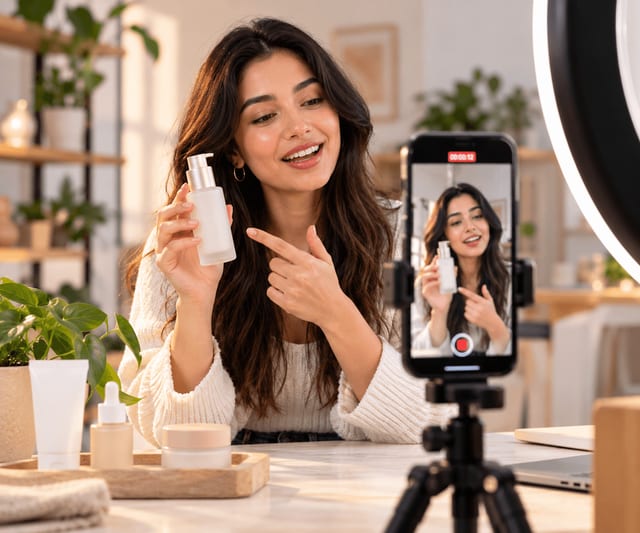
UGC ads are ads made from content that looks like it came from a customer. A creator films themselves using or reviewing your product, and you run that video as a paid ad. Shopify's guide calls this paid UGC: creators are paid to make customer-style content that brands use as ad creative.
Organic UGC is voluntary: a customer posts a photo and tags your brand, and you ask to share it. Paid UGC is commissioned. Shopify's UGC guide notes that paid UGC creators typically do not post the content to their own audiences. They hand it to the brand, which runs it as an ad.
That difference matters for how you plan. Organic UGC is free and unpredictable. UGC ads are a purchase, so you can brief them, repeat them, and test them.
What do UGC ads look like?
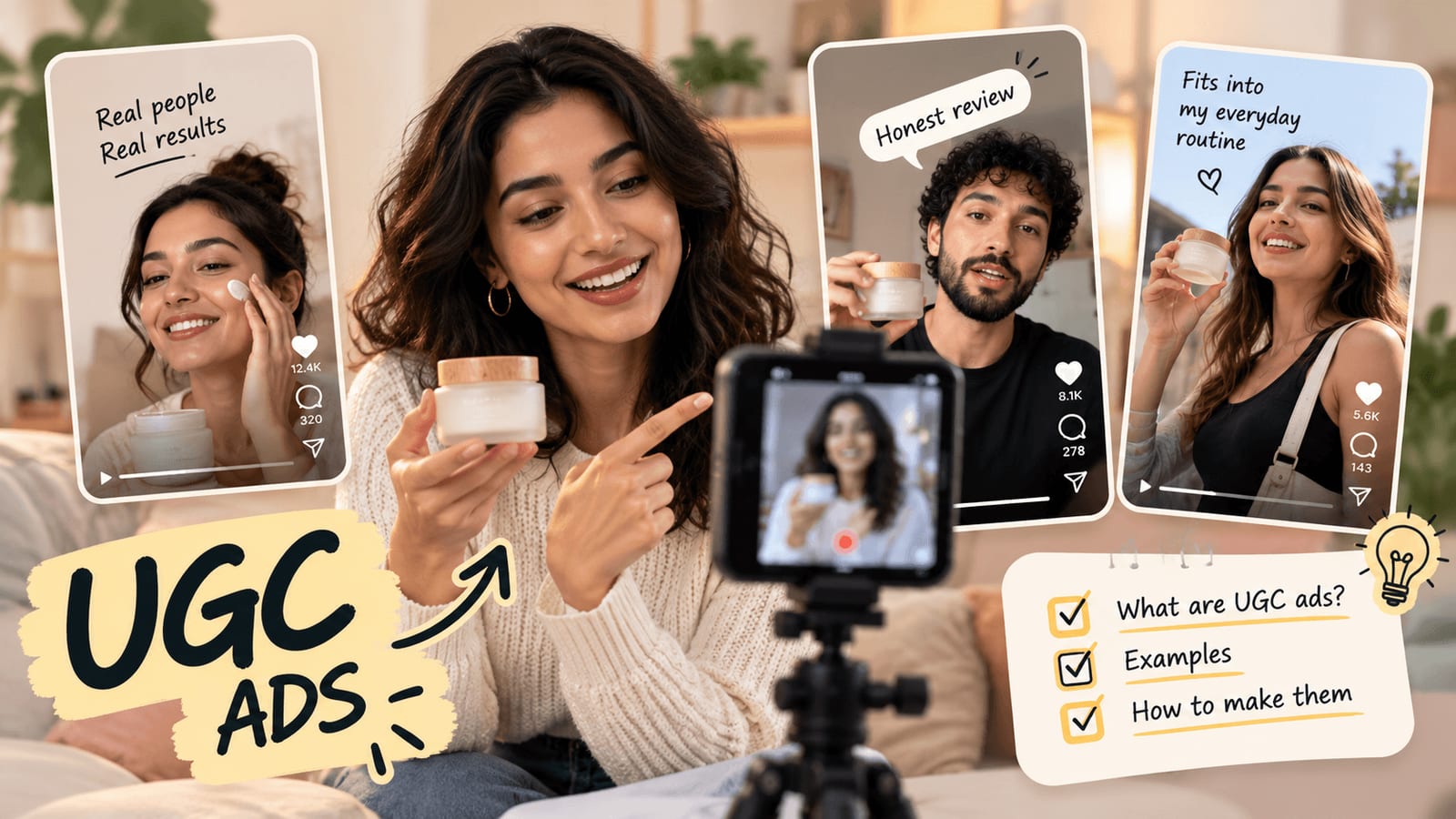
Most UGC ads use a few simple formats: a talking-head review, an unboxing, a demo of the product in use, a problem-and-solution story, and a before-and-after. All are shot vertically on a phone, with natural light and plain speech. The hook comes in the first seconds, and the product shows up early.
- Talking-head review: One person speaks to the camera about what the product does for them.
- Unboxing: The product arrives and gets a first reaction.
- Demo: The creator uses the product and narrates what is happening.
- Problem and solution: The video opens on a common annoyance, then shows the product fixing it.
- Before and after: Two states side by side, with the product in between.
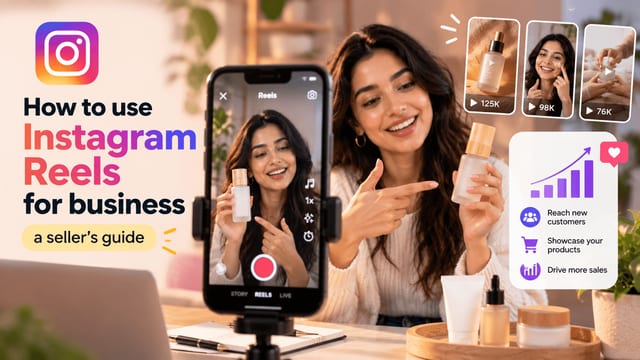
Shopify's guide to Instagram Reels notes that Instagram counts views lasting at least three seconds as a recommendation signal, so the first three seconds carry the video. Open with the problem or a bold line, then show the product. For more on vertical video, read how to use Instagram Reels for business.
Keep the polish low. A UGC ad that looks like a studio spot loses the thing it was built to borrow, which is the feel of a real person talking.
Why do UGC ads work?
UGC ads work because shoppers lean on other people's experience when they decide to buy. Surveys that Shopify cites show that most shoppers use customer content before purchase. These figures cover UGC in general, not ads alone, so read them as supporting evidence, not a guarantee for any single ad.
- Reliance: 65% of US consumers rely on UGC when making buying decisions, according to the Bazaarvoice Shopper Experience Index as cited by Shopify.
- Photos and video: 91% are more likely to buy when reviews include photos and videos, according to PowerReviews, also cited by Shopify.
- Conversion: Posts featuring UGC had more than 10 times the conversion rate of posts without it, according to Emplifi's Q3 2025 benchmarks report, as cited by Shopify.
The Emplifi figure measures social posts, not paid ads. Use it as a signal that real-looking content performs, then run your own test. Your audience and product will set the real numbers.
How much do UGC ads cost?
UGC ads cost about $202 per paid collaboration on average, according to Collabstr's 2025 data as cited by Shopify. Your price will vary with the creator and the usage rights you ask for. Quotes from a marketplace average are a starting point, not a rate card.
Shopify's roundup adds that UGC creators grew 93% year over year in Collabstr's 2025 report, and that 15% of influencer collaborations were UGC campaigns. More creators means more choice and, often, more competition on price.
At roughly $202 a video, the cost adds up fast when you want ten hooks for one product. That is the main reason brands look at cheaper ways to make variants, covered below. If you sell on TikTok, see how this cost fits with TikTok Shop fees.
How do you make UGC ads?
To make UGC ads, write a short brief, choose who will film, give them the product, collect real experience, film vertically on a phone, edit for the first three seconds, and test several versions. The process is the same whether the creator is a customer or a hired creator.
- Write a brief. State the product, the one claim that matters, any offer, and what to avoid. Keep it to one page.
- Choose the creator. Use a real customer or a paid creator. Match the person to your buyer.
- Send the product. Let them use it before they film. A real experience gives you real lines.
- Script talking points, not lines. Give the creator the facts to cover, and let them say it in their own words.
- Film vertical, in natural light. A phone and a window are enough. Hold the product close to the camera.
- Edit for the hook. Cut dead air and put the strongest line first.
- Test variants. Run the same product with different hooks and compare results.
Step 4 is the one that keeps you safe. The next section explains why.
Can AI make UGC ads, and is it allowed?
AI can make a UGC-style video from product photos, but the words must still be true. The FTC's testimonial rule took effect October 21, 2024. FTC guidance says it has no blanket ban on AI avatars. A testimonial from an avatar is prohibited only if the underlying testimonial is fake or false.
That comes from the FTC's questions and answers on the rule. The same page says influencers can be liable if they lie about having used a product. Businesses can be liable if they knew or should have known that an influencer misrepresented their experience. Courts can impose civil penalties for knowing violations, and this is not legal advice, so talk to a lawyer about your own ads.
Here is what that means in practice.
- Do not script fake experience. A synthetic creator who says "I used this for three months" is making a claim nobody lived. Stick to facts about the product and what it does.
- Demonstrate, do not testify. Narrated demos and offers are safer than first-person reviews.
- Get rights to every face. Only use portraits you have permission to use.
- Check platform rules. TikTok and Meta have their own rules on labeling AI-generated video. Read them before you post.
Sloosh is an AI creative studio for images and video, and it is in beta. Its AI UGC Video Ad Creator Space takes 1 to 8 product photos and one creator portrait, plus an optional brief with tone, offer, and call to action. It writes a script and makes a video of 4 to 15 seconds in one of three aspect ratios. The page says it is made for TikTok and Instagram videos and for Meta Ads, and it tells you to upload only photos of products and people you have rights to use. For a still-image ad, the Product Poster Ad Creative Space makes a vertical 4:5 poster from a product photo and a short headline. You can see every ready-made workflow on the Spaces page.
To keep the same character across several videos, see how to keep a consistent AI character in every image. For more setups, browse the UGC templates and the ads and marketing templates. For a wider tour of tools that make images, video, and ads, read AI tools for ecommerce.
Our honest view: AI is a fast way to draft many hooks for a product demo. When you want a review-style claim, a real customer or a paid creator who has used the product gives you a testimonial that is true and safe to run.
What should you do first?
Start with one product and one claim you can prove. Film a short demo on your phone, or have a creator do it. Then draft three hook variants and test them against each other. Keep the one that holds attention in the first three seconds.
If you want more variants without more shoots, Sign up for Sloosh and run a product photo through the AI UGC Video Ad Creator. Sloosh shows the credit cost before you run it, and new accounts get 20 starter credits once. Check the result against the real product, and keep the script to facts. See the pricing page for plans.
Questions
- What is the difference between UGC and UGC ads?
- UGC is any content customers make, such as reviews and photos. UGC ads are paid ads built to look like that content. Shopify describes them as creators paid to make customer-style content that brands run as ad creative, usually without posting it to their own audience.
- Do UGC ads have to be made by real customers?
- No. Most are made by paid creators. What matters is that any testimonial reflects real experience. FTC guidance says influencers can be liable for lying about using a product, and businesses can be liable if they knew or should have known.
- How long should a UGC ad be?
- It depends on the platform and the goal, so check your ad platform's limits. Sloosh's AI UGC Video Ad Creator makes videos of 4 to 15 seconds. Whatever the length, put the hook in the first three seconds and show the product early.
- Can I use AI-generated people in ads?
- The FTC says it has no blanket ban on AI-generated avatars in marketing. A testimonial from an avatar is prohibited only if it is fake or false. Use demos and facts, get rights to any portrait, and check each platform's AI labeling rules.
- How much does a UGC creator cost?
- Collabstr's 2025 data, cited by Shopify, puts the average paid UGC collaboration near $202. Your cost depends on the creator and the usage rights. Get quotes from several creators before you set a budget.
- Where can I run UGC ads?
- UGC ads are common on TikTok and Instagram. Sloosh's AI UGC Video Ad Creator is listed as made for TikTok and Instagram videos and for Meta Ads, in three aspect ratios. Check each platform's ad specs before you upload.
Try it in Sloosh
Open the space from this post and run it on your own product.